Dark spots — the flat, brownish patches that show up after a pimple heals, after too much sun, or just with age — are one of the most common skin concerns there is. They form when skin cells called melanocytes overproduce a pigment called melanin, usually in response to inflammation or UV exposure. Most people know they exist; fewer people know they’re treatable with specific ingredients called brightening actives (compounds like niacinamide, kojic acid, and tranexamic acid that interrupt or slow down that pigment overproduction). The question this article answers is specific: can a moisturizer — the cream step most people already use every day — do that correction work at the same time? The short answer is yes, but only if the formulation is doing it right. Here’s how to read the label, compare the trade-offs across price tiers, and decide whether a correcting moisturizer earns its place in your routine or whether it’s just marketing in a jar.
| EDITOR'S PICK[Eucerin Radiant Tone Dual Serum](https://www.amazon.com/dp/B0DJV8MYYN?tag=greenflower20-20)… | Mid-tier[celimax Pore+Dark Spot Brighten](https://www.amazon.com/dp/B0DHKSF81K?tag=greenflower20-20)… | Budget pickPalmer's Skin Success Anti-Dark… | |
|---|---|---|---|
| Active ingredient 1 | Thiamidol | Niacinamide | Niacinamide |
| Active ingredient 2 | Hyaluronic Acid | Tranexamic Acid | Vitamin E |
| Size | 1 fl oz | 35 ml | 2.7 oz |
| Texture | Serum | Cream | Cream |
| Targeted concern | Dark spots | Pores + dark spots | Dark spots |
| Skin type | — | Sensitive skin | All skin types |
| Price | $39.39 | $22.99 | $5.63 |
| See on Amazon → | See on Amazon → | See on Amazon → |
Why the “Moisturizer Step” Is Worth Fighting For
If you’ve spent any time building a brightening routine, you’ve probably heard the same protocol: vitamin C serum in the morning, retinoid at night, SPF always. That’s solid advice. But it assumes you have the skin tolerance and the routine bandwidth for five-plus steps — and many people don’t.
The moisturizer step is different from a serum step in one important way: it’s non-negotiable for most skin types. You’re going to moisturize anyway. So if a cream can deliver a meaningful dose of a brightening active on top of its barrier-support work, you’re getting correction without adding a step. That’s a real efficiency gain, not a gimmick — provided the active is at an effective concentration.
This is the core trade-off with moisturizer-format brightening products: cream bases are inherently diluting. Emollients, humectants, and occlusives take up formulation real estate. A 5% niacinamide serum is almost entirely water and niacinamide. A 5% niacinamide moisturizer is niacinamide competing with shea butter, glycerin, ceramides, and whatever else the brand is selling on. The concentration is the same, but the delivery environment is different — and for some actives, that matters more than others.
Which Actives Actually Perform in a Cream Base
Not all brightening ingredients are equally suited to a moisturizer format. Here’s the practical breakdown.
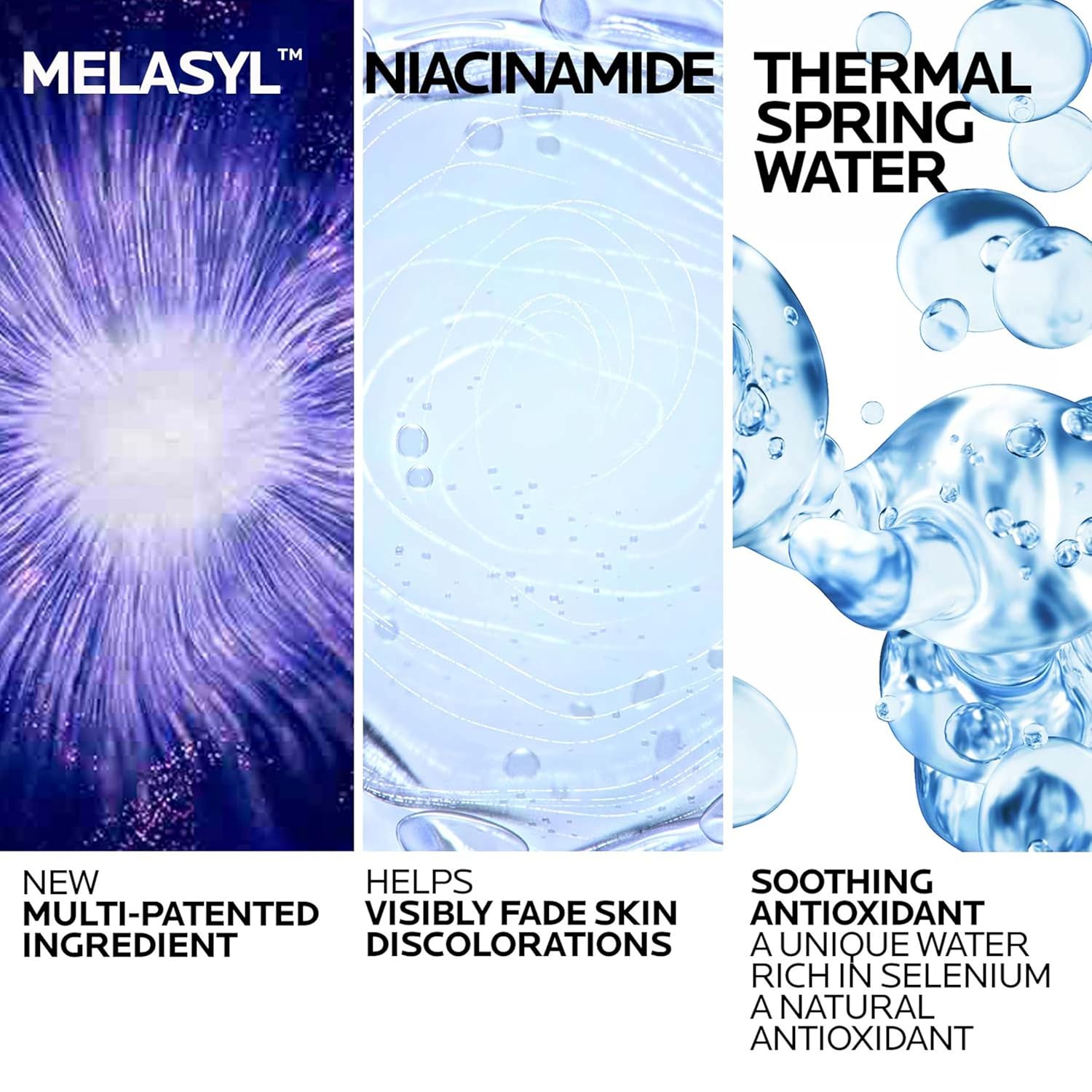
Niacinamide (vitamin B3) is the clearest win. It’s water-soluble, stable across pH ranges, and clinically studied at 2–5% concentrations for reducing hyperpigmentation and evening skin tone. Per research published in Dermatologic Surgery by Bissett et al. (2005), 5% niacinamide measurably reduced hyperpigmentation versus vehicle control over 8 weeks. Because it doesn’t require a low-pH environment the way L-ascorbic acid does, it integrates cleanly into moisturizer pH ranges. The Paula’s Choice Ingredient Dictionary confirms effective range starts at 2%, with most clinical research centered at 5%. Anything below 2% on a label is likely there for marketing, not measurable correction.
Tranexamic acid (TXA) is arguably the most exciting brightening active for a cream vehicle. It’s hydrophilic, extremely stable, and doesn’t require acidic conditions to function. Healthline’s overview of tranexamic acid in skincare, sourced from the Indian Dermatology Online Journal research by Nair et al. (2020), places effective topical concentrations at 2–5%. Because it works by blocking UV-induced plasmin activity (which triggers melanin production) rather than by direct acid exfoliation, it doesn’t disrupt a moisturizer’s pH or interfere with its emollient ingredients. If a correcting moisturizer is going to earn its place in a morning routine, TXA at ≥2% is the active most worth looking for.
Kojic acid works — the evidence from Zubair and Mujtaba (2009) in the Journal of Pakistan Association of Dermatologists is solid — but it’s pH-sensitive and oxidizes quickly. In a cream format without careful stabilization, kojic acid can degrade before it reaches your skin. If you see it on a label, look for it in the first half of the ingredient list and check that the product is packaged in an airless pump or opaque sealed tube rather than a jar. Jar packaging for kojic acid formulations is a yellow flag.
L-ascorbic acid (vitamin C) is the most problematic active in a moisturizer format. It requires a pH below 3.5 to be bioavailable, and most moisturizers are formulated at pH 5–7 to preserve barrier compatibility. At that range, L-ascorbic acid is largely inert. If you see “vitamin C” in a correcting moisturizer, check whether the form listed is L-ascorbic acid (needs low pH), ascorbyl glucoside, sodium ascorbyl phosphate, or ascorbyl tetraisopalmitate (more stable derivatives that function at higher pH but with lower potency than well-formulated L-ascorbic acid serums). Pullar et al. (2017) in Nutrients (MDPI) covers the stability differentials across ascorbic acid derivatives clearly. The takeaway: vitamin C in a moisturizer is almost always a stabilized derivative, not pure L-ascorbic acid — which is fine as long as you’re not expecting serum-level correction.
By the Numbers
| Active | Minimum effective % | Cream-format stability | Best packaging |
|---|---|---|---|
| Niacinamide | 2% (5% optimal) | Excellent | Any |
| Tranexamic acid | 2% | Excellent | Any |
| Kojic acid | 1–2% | Moderate (oxidizes) | Airless pump or opaque tube |
| L-ascorbic acid | 10–15% at pH <3.5 | Poor in standard cream pH | Moot — wrong vehicle |
| Ascorbyl derivatives | 5–10% | Good | Opaque packaging |
Price-Tier Tradeoffs: What You’re Actually Paying For
This is where the practitioner read matters. Let’s run through three tiers honestly.
Drugstore ($12–$30): Products like Neutrogena’s Rapid Tone Repair Moisturizer and L’Oréal’s Glycolic Bright range deliver real actives — niacinamide, glycolic acid, vitamin C derivatives — at accessible price points. The trade-off is usually concentration and secondary ingredient quality. You may get 2% niacinamide instead of 5%, or an ascorbyl derivative at a percentage the brand doesn’t disclose. Allure’s roundup of brightening moisturizers consistently calls out Neutrogena’s line as delivering visible results over 8–12 weeks, which tracks with what published data says about lower-concentration actives needing longer timelines. These are legitimate options, not placebo products — but your expectations need to match the dose.
Mid-tier ($30–$80): Good Molecules Discoloration Correcting Serum (technically a serum, but worth benchmarking) is transparent about its 3% tranexamic acid and 5% niacinamide — and that label transparency is itself a signal about formulation intent. At the moisturizer level in this tier, you’re looking for brands that list concentrations or use airless packaging, which suggests formulation rigor. The Tatcha Violet-C Brightening Serum at $88 sits at the upper end of this range and leans on a stabilized vitamin C derivative with supporting botanicals — Byrdie notes that reviewers appreciate the texture and the ingredient layering, though the correction timeline is measured in months, not weeks, consistent with derivative-form vitamin C.
Prestige ($80–$385): SkinCeuticals Discoloration Defense ($98) is a serum, not a moisturizer, but it sets the standard for what clinical-grade TXA + niacinamide formulations look like: 3% tranexamic acid, 1% kojic acid, and 5% niacinamide, all on the label. That transparency is the benchmark to hold prestige moisturizers to. La Mer Brightening Essence Intense ($385) leads with its proprietary Miracle Broth and brightening complex — the brand does not publish specific percentages, which is typical at this tier but means you’re buying on trust and texture more than on verifiable dose. If you’re recommending a prestige correcting moisturizer to a client, be honest about that distinction: SkinCeuticals’ open-label approach to efficacy data is a different product promise than La Mer’s experiential one. Both are valid purchases; they’re just answering different questions.
Layering Compatibility: The Make-or-Break Variable
A correcting moisturizer is a final cream step. That means everything applied before it needs to play nicely with its actives — and vice versa.
Niacinamide + L-ascorbic acid serums: An old concern about niacinamide converting to niacin and causing flushing when used with vitamin C serums has been largely retired by formulation science. The Paula’s Choice Ingredient Dictionary notes that the reaction requires concentrations and conditions not typically present in cosmetic formulas, and that modern pH-buffering resolves the issue. These can be layered.
Tranexamic acid + retinoids: No known antagonism. TXA is non-exfoliating, so it doesn’t compound the irritation risk from retinoids the way AHAs do. This is part of what makes TXA-forward correcting moisturizers appealing for evening routines alongside a retinoid — you’re stacking correction mechanisms without stacking irritation risk.
Kojic acid + AHAs or BHAs: Use caution. Both are exfoliating or mildly acidifying, and layering them increases sensitivity risk, particularly for medium to deeper skin tones where post-inflammatory hyperpigmentation (PIH) is a real concern. If your client is using a glycolic or salicylic acid treatment, a kojic acid moisturizer on top is likely to be more irritating than correcting. Separate to alternate days or AM/PM split.
SPF interaction: This matters and is underdiscussed. If your correcting moisturizer is your last AM step before SPF, confirm the SPF is a separate step, not mixed in. Combining active-laden moisturizers with SPF in one product often means underdosing on both. Byrdie and Allure both consistently advise applying SPF as a discrete final step rather than relying on combined SPF moisturizers for sun protection in a brightening protocol.
The Decision Rule
If you’ve read this far, here’s the honest if-then framework:
If your client or your own routine already has a dedicated vitamin C serum and retinoid in rotation: a correcting moisturizer is primarily a delivery vehicle for niacinamide and TXA — look for ≥5% niacinamide and ≥2% TXA, in that order of importance. Price ceiling can be moderate; you’re filling a support role, not a primary treatment role.
If the correcting moisturizer is the primary or only brightening active in the routine (common for sensitive skin, minimalist routines, or clients new to actives): price up to a formulation with published or disclosed concentrations. You need to know what dose you’re delivering. SkinCeuticals Discoloration Defense at $98 sets a bar for label transparency that the field hasn’t fully matched at the moisturizer format yet — but it tells you what to demand on any label you’re evaluating.
If the ask is purely prestige or gift-tier: La Mer and Tatcha are defensible picks for clients who prioritize texture, sensory experience, and brand presentation. Just set the efficacy expectation appropriately: these are long-timeline corrections supported by elegant formulations, not clinical-speed interventions. That’s a different value proposition, not an inferior one — as long as everyone in the conversation understands which question is being answered.
The moisturizer step is real estate. A correcting moisturizer earns that real estate when it carries a disclosed, effective dose of a stable active. Read the label like it’s a contract — because in formulation terms, it is.