Dark spots — those flat, brownish patches that show up after a pimple heals, after a summer of sun, or just as skin ages — are one of the most common skincare concerns across every skin tone. The good news is that three ingredients have quietly become the industry’s most clinically credible answer to them: tranexamic acid (TXA), a molecule originally used in medicine that turns out to be exceptional at calming the overproduction of pigment; niacinamide (a form of vitamin B3) that interrupts the process by which pigment moves into skin cells; and alpha-arbutin, a plant-derived compound that slows down the enzyme responsible for making dark pigment in the first place. Each works on a different step of the same problem. That’s why brands — from Good Molecules at $14 to SkinCeuticals at $98 — are stacking all three into single formulas or recommending them as a deliberate routine sequence.
This article is for the reader who already knows these names but is now facing a real decision: which combination product is actually worth it, how do you layer these actives without them fighting each other, and what are the tradeoffs at each price point? We’ll show the math, name the conflicts, and leave you with a clear decision rule.
How TXA, Niacinamide, and Arbutin Actually Work — and Why the Stack Makes Sense
Understanding the mechanism is the decision frame here. Melanin (the pigment that causes dark spots) is produced through a chain of events: UV light or inflammation triggers a signal, that signal activates tyrosinase (an enzyme), tyrosinase drives melanin synthesis, and then melanin-containing packages called melanosomes transfer into surrounding skin cells, where they become visible as a dark spot.
Alpha-arbutin attacks the tyrosinase step. Per a 2019 mechanistic review published on PubMed (Boo, 2019), arbutin inhibits tyrosinase activity directly, with the alpha form showing significantly greater stability and efficacy than beta-arbutin at equivalent concentrations. Effective concentration in formulations: 1–2% alpha-arbutin is the documented threshold; below 0.5%, clinical impact is minimal.
Niacinamide operates downstream. It doesn’t inhibit tyrosinase — it blocks the transfer of melanosomes from melanocytes (the pigment-producing cells) to neighboring keratinocytes (the surface cells where spots become visible). The landmark study here is Hakozaki et al., 2002, published on PubMed, which found that 5% niacinamide significantly reduced melanosome transfer after four weeks. Paula’s Choice’s Ingredient Dictionary cites the same threshold: 5% is the minimum effective concentration, though 10% is better tolerated than often assumed and adds anti-inflammatory benefit.
Tranexamic acid works earlier in the cascade, at the signaling step. It inhibits plasminogen activator, which in turn reduces the UV-triggered communication between keratinocytes and melanocytes that initiates melanin production. A randomized controlled trial comparing tranexamic acid to hydroquinone for melasma (Ebrahimi and Mirdamadi, 2014, PubMed) found topical TXA at 3–5% effective concentration produced comparable results to 2% hydroquinone with a better tolerability profile. Healthline’s overview of tranexamic acid in skincare confirms the 3–5% range as the clinical benchmark.
The stack rationale: because each ingredient interrupts a different step, they’re additive rather than redundant. You’re not doubling up — you’re blocking multiple exit routes for pigment formation simultaneously. This is the same logic behind why combination therapies outperform monotherapies in published melasma literature.
By the Numbers
| Ingredient | Minimum Effective % | Primary Target in Pigment Pathway | pH Sensitivity |
|---|---|---|---|
| Alpha-arbutin | 1–2% | Tyrosinase inhibition | Stable 4.0–7.0 |
| Niacinamide | 5% | Melanosome transfer | Stable across most pH ranges |
| Tranexamic acid | 3–5% | Plasminogen / UV signaling | Stable; tolerates acidic pH |
Layering Compatibility: What Works Together and What Doesn’t
This is where most “guide” articles get vague, and that vagueness has real consequences for protocol design. Here’s the actual compatibility picture.
The TXA + Niacinamide + Arbutin trio: genuinely low conflict
These three play well together. None of them require an acidic pH environment to activate (unlike AHAs or L-ascorbic acid), none of them sensitize skin to the same contact-irritation pathways, and they don’t compete for the same receptors. If you’re using a single serum that contains all three — and several do, at both the mass-market and prestige tiers — the formulation challenge is primarily about pH stability and preservative system, not ingredient antagonism. Per the Paula’s Choice Ingredient Dictionary’s entry on niacinamide, the long-cited concern about niacinamide + vitamin C (L-ascorbic acid) producing a flushing byproduct (nicotinic acid) is not replicated with arbutin or TXA. The trio is genuinely stackable.
The conflicts to actually watch for
Niacinamide + high-concentration L-ascorbic acid (LAA): The niacin flush concern is more theoretical than clinically significant in modern formulations, but the more practical issue is pH incompatibility. LAA requires pH ≤3.5 to remain stable and absorb effectively; niacinamide at that pH range can degrade. If your protocol includes SkinCeuticals C E Ferulic or another pure LAA serum, separate it from your TXA/niacinamide/arbutin serum by at least 20–30 minutes, or use them on alternating AM/PM schedules.
Alpha-arbutin + AHAs at low pH: Arbutin is stable across a broad pH range, but at very low pH (below 3.0), there’s a hydrolysis pathway where arbutin can convert to free hydroquinone. This isn’t necessarily a problem in small amounts, but it’s worth knowing if you’re layering directly over a high-percentage glycolic toner. Byrdie’s ingredient guide to alpha-arbutin flags this conversion as a reason to check your routine sequencing.
TXA + retinoids: There’s no documented antagonism between tranexamic acid and retinol or retinal, and combining them for a comprehensive anti-pigmentation protocol is clinically reasonable. The practical caution is tolerability stacking — if you’re also using tretinoin or a high-strength retinoid, adding TXA in the same PM routine may push irritation in sensitive skin types. Not a compatibility failure; a tolerability management question.
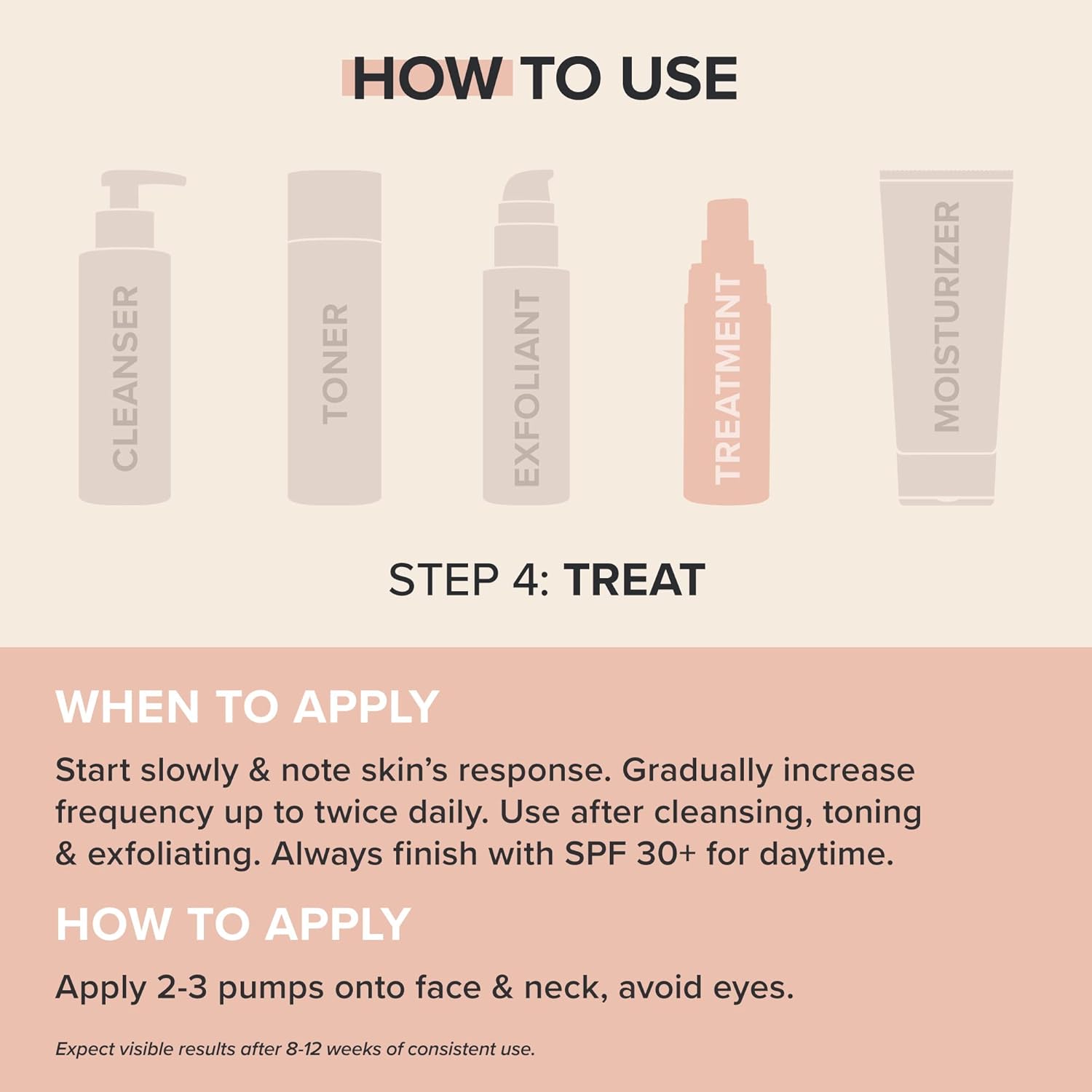
The safe stack sequence (AM): Cleanser → toner (pH-neutral or slightly acidic) → TXA/niacinamide/arbutin serum → SPF 30+. The SPF step is non-negotiable here: all three actives target UV-triggered pigmentation, and skipping SPF negates a significant portion of their efficacy. Healthline’s overview of tranexamic acid specifically flags SPF as the required co-intervention.
Product Tier Analysis: Where the Formulation Math Works
Mass-market tier ($12–$30)
Good Molecules Discoloration Correcting Serum (~$14) is the reference product in this category. Published formulation data shows tranexamic acid (3%), niacinamide (5%), and kojic acid — not arbutin — as the primary actives. It clears the minimum effective threshold for both TXA and niacinamide. The tradeoff: no alpha-arbutin, a thinner texture that may need a separate moisturizing step, and kojic acid (which has a lower stability ceiling than arbutin). Reviewers across aggregated skincare communities consistently name it as the most accessible entry point for TXA-based protocols.
L’Oréal Glycolic Bright range includes niacinamide but does not lead with TXA, and is better framed as a glycolic + niacinamide play rather than a true TXA stack. Different mechanism, still legitimate for early-stage dark spots.
Mid-tier ($30–$80)
Paula’s Choice C15 Super Booster is a pure LAA-based product — not a TXA/niacinamide/arbutin stack — but it’s frequently layered alongside them. If you’re building a multi-serum protocol, PC’s Discoloration Repair Serum (separate product, ~$49) includes both niacinamide (5%) and tranexamic acid and is one of the more transparently formulated mid-tier options. Paula’s Choice’s Ingredient Dictionary makes it easy to cross-reference concentration claims against their own published formulation data.
Tatcha Violet-C Brightening Serum (~$88) sits at the top of this tier. It combines vitamin C derivatives with niacinamide but does not include TXA. Its strength is texture, tolerability, and the brand’s formulation stability — not the three-way stack this article is specifically analyzing. Worth naming because it’s a common comparison point, but it’s a different protocol philosophy.
Prestige/clinical tier ($80+)
SkinCeuticals Discoloration Defense (~$98) is the most cited clinical reference in this category. It combines tranexamic acid (5% — at the upper end of the documented effective range), niacinamide (niacin-adjacent supporting ingredients), and kojic acid in a formulation that also includes HEPES (a gentle exfoliant). Aestheticians and spa directors who recommend it consistently cite its clinical trial backing and the brand’s published stability data. The tradeoff versus a lower-priced TXA serum is real: you’re paying for formulation stability, the brand’s clinical credibility with clients, and a concentration that clears 5% TXA. Per Dermstore’s editorial overview of the product, it’s recommended as a standalone treatment rather than a layering vehicle — which reflects the concentration load.
Murad Rapid Age Spot Correcting Serum (~$82) takes a different approach, leading with glycolic acid and tranexamic acid. It’s more aggressive on exfoliation, which means it conflicts more with other exfoliating actives in the same routine.
The Decision Rule
Here’s the “if X, then Y” framework for building or recommending a TXA/niacinamide/arbutin protocol:
If you’re building a single-product, low-complexity routine: Look for a formula that clears 3%+ TXA, 5%+ niacinamide, and 1%+ alpha-arbutin in one serum. Good Molecules’ formula gets you 2 of 3 at price entry; the gap is arbutin. Budget a separate SPF and nothing else.
If you’re running a multi-serum protocol with an LAA vitamin C product: Keep your LAA serum in AM Step 1, wait 20 minutes, then apply the TXA/niacinamide serum. No arbutin-specific conflict, but don’t layer them simultaneously.
If you’re recommending to a client with sensitive or reactive skin: Start with niacinamide at 5% alone for 2–4 weeks, then introduce TXA at 3%. Arbutin is the most universally tolerated of the three and can be added at any point. SkinCeuticals Discoloration Defense is the defensible prestige recommendation here because its clinical data supports the conversation.
If the goal is professional-grade outcomes with documentation: SkinCeuticals Discoloration Defense at $98 is the formulaically justifiable choice at the prestige tier — not because the brand name carries weight, but because 5% TXA is the concentration that maps directly to the Ebrahimi and Mirdamadi RCT data. That’s the conversation to have with clients comparing it to a $14 alternative: same active, higher concentration, published stability.
The research supports this triple-stack as one of the most clinically rational approaches to dark-spot correction available without a prescription. The layering is clean. The price tiers offer real choice. The concentration thresholds are documentable. What makes this stack work isn’t magic — it’s mechanism coverage, and now you can explain exactly why.