Dark spots — whether from sun exposure, old acne marks, or hormonal changes — form when melanocytes overproduce a pigment called melanin. Brightening serums are designed to interrupt that overproduction, either by blocking the enzyme that triggers it, by accelerating cell turnover so pigmented cells shed faster, or by doing both at once. The difference between a $12 option and a $182 option isn’t always the active ingredient that does the work. Often it’s the concentration, the delivery system, or the supporting cast of stabilizing ingredients. This guide breaks that down at the INCI level — so you can look at any ingredient label and decide for yourself whether the premium is worth paying.
The short answer: sometimes yes, sometimes absolutely not. The long answer follows.
The Four Actives That Actually Move the Needle
Before comparing specific products, it helps to align on what the published evidence actually supports. Brightening is one of the most overclaimed categories in skincare. The four actives below have the most consistent peer-reviewed data behind them.
L-ascorbic acid (Vitamin C). This is the only form of Vitamin C with direct, replicated evidence for reducing hyperpigmentation and stimulating collagen synthesis. A 2017 review by Pullar, Carr, and Vissers published in Nutrients (PubMed ID 28805671; available at pubmed.ncbi.nlm.nih.gov) confirmed its role in inhibiting melanin synthesis and its potency as a free-radical scavenger. The minimum effective concentration is 10%, with most clinical data clustered between 10–20%. Below 10%, the effect on pigmentation is negligible. The instability problem is real: L-ascorbic acid oxidizes on contact with air and light, which is why formulation quality — packaging, pH, antioxidant synergists like ferulic acid — matters enormously.
Tranexamic acid. Originally a surgical drug used to reduce bleeding, topical tranexamic acid at 2–5% has shown meaningful results on melasma in multiple randomized controlled trials, including a 2020 study by Holloway Barbosa et al. published in the Journal of the American Academy of Dermatology (PubMed ID 32035574; available at pubmed.ncbi.nlm.nih.gov). It works by blocking the interaction between UV-stressed keratinocytes and melanocytes. It layers cleanly with nearly everything — no pH conflict issues, no purge risk, well tolerated by rosacea-prone and sensitive skin.
Niacinamide (Vitamin B3). A 2002 study by Hakozaki et al. published in the British Journal of Dermatology (PubMed ID 12100186; available at pubmed.ncbi.nlm.nih.gov) established niacinamide’s mechanism: it inhibits melanosome transfer from melanocytes to surrounding skin cells. At 4–5% it produces measurable brightening; 10% is the clinical upper end before diminishing returns. It’s one of the most forgiving actives — compatible with almost everything except high-concentration L-ascorbic acid applied in the same step, where the two can convert to niacin and cause temporary flushing.
Kojic acid. Derived from fungi, kojic acid inhibits tyrosinase — the key enzyme in melanin synthesis. A 2010 safety review by Burnett et al. published in the International Journal of Toxicology (PubMed ID 20634497; available at pubmed.ncbi.nlm.nih.gov) confirmed efficacy and a reasonable safety profile at cosmetic concentrations of 1–2%. Above 2% it becomes a skin sensitizer. It’s often combined with other actives because it works synergistically rather than linearly.
By the Numbers: Minimum Effective Concentrations
| Active | Minimum Effective % | Clinical Sweet Spot | Common Fail Threshold |
|---|---|---|---|
| L-ascorbic acid | 10% | 15–20% | < 10% (most drugstore serums) |
| Tranexamic acid | 2% | 3–5% | < 2% |
| Niacinamide | 4% | 5–10% | < 4% |
| Kojic acid | 1% | 1–2% | > 2% (sensitization risk) |
Where the Price Gap Is Justified: Stabilized Vitamin C
This is the clearest case where spending more is often the right call — but only from the right brands.
L-ascorbic acid is notoriously hard to stabilize. The Paula’s Choice Ingredient Dictionary entry for L-Ascorbic Acid (paulaschoice.com, Ingredient Dictionary) documents that effective L-ascorbic acid formulas require a pH of 3.5 or below, a water-minimized base, and protective co-antioxidants to slow oxidation. Getting all three right in a product that survives a retail supply chain is genuinely difficult.
Premium Pick: SkinCeuticals C E Ferulic
SkinCeuticals C E Ferulic ($182) is the benchmark precisely because it solved the stabilization problem first, at scale, with published data. Its formulation — 15% L-ascorbic acid, 1% alpha-tocopherol, and 0.5% ferulic acid — is backed by a Duke University patent and multiple peer-reviewed studies. The price reflects formulation R&D, packaging (amber glass with an airless-style pump), and the difficulty of manufacturing at a pH of 2.5–3.0 without destabilizing the molecule. Byrdie’s editorial team (Byrdie, “The Best Vitamin C Serums, According to Our Editors”) has consistently named it among the most evidence-backed Vitamin C serums on the market, and Allure’s beauty editors (Allure, “The Best Vitamin C Serums for Every Skin Type”) have cited its oxidation stability timeline as meaningfully longer than most alternatives at any price point.
Decision rule: If you have significant UV-induced hyperpigmentation and the budget for it, C E Ferulic has the formulation evidence. The active concentration, co-antioxidant pairing, and packaging all hit clinical-grade thresholds simultaneously.
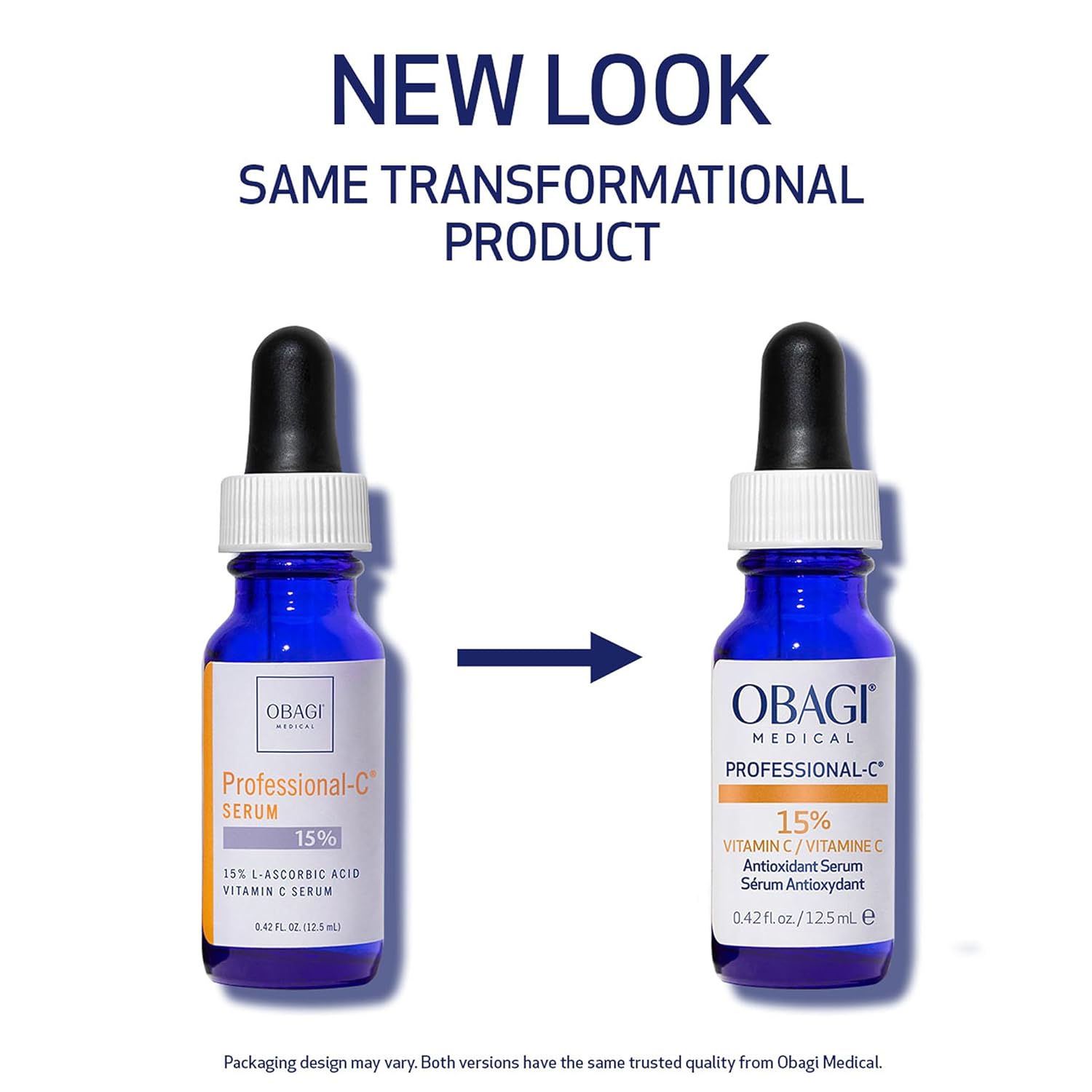
Obagi
$75.00
In stock on Amazon
Check price on AmazonMid-Tier Pick: Paula’s Choice C15 Super Booster
Paula’s Choice C15 Super Booster ($49) delivers 15% L-ascorbic acid with stabilizing agents at a more accessible price. Based on disclosed formulation specs and the brand’s published formulation transparency (Paula’s Choice, Ingredient Dictionary), it hits the minimum effective threshold for both concentration and pH. Byrdie’s product reviews (Byrdie, “The Best Vitamin C Serums, According to Our Editors”) have noted it as a strong performer relative to price for those who want a clinically dosed Vitamin C without the prestige markup. The tradeoff versus C E Ferulic is primarily in the ferulic acid concentration and the volume of independent third-party stability testing — SkinCeuticals has more of both.
Decision rule: For budget-constrained shoppers who need a real Vitamin C serum, Paula’s Choice C15 is the evidence-aligned option. Avoid any product — at any price — where L-ascorbic acid does not appear in the top five INCI ingredients. If it’s buried lower on the list, it’s almost certainly underdosed.
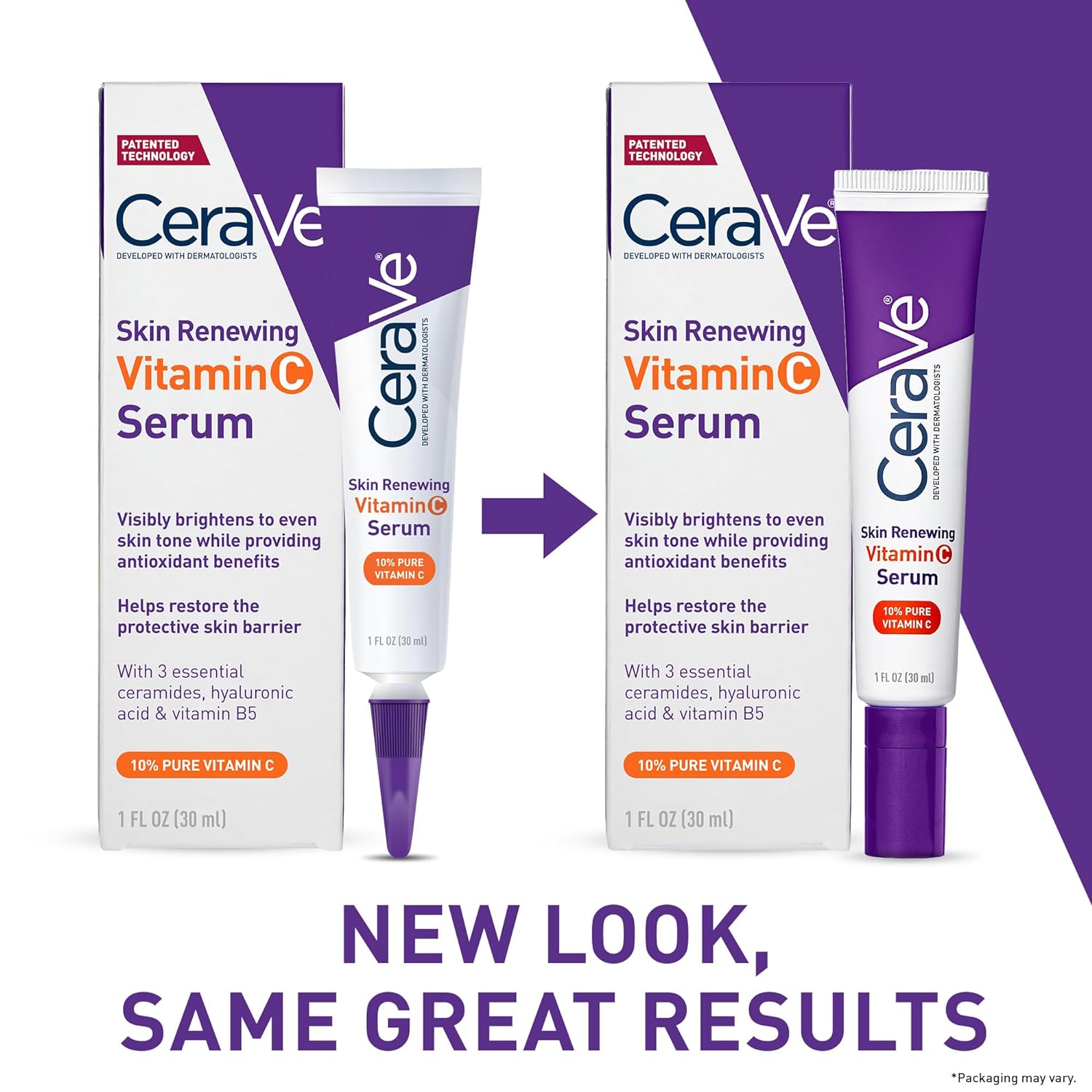
CeraVe
$23.86
In stock on Amazon
Check price on AmazonBudget Pick: What Drugstore Vitamin C Actually Delivers
L’Oréal Glycolic Bright Serum ($12–$16) does not lead with L-ascorbic acid. It leads with glycolic acid — a different mechanism entirely (exfoliation and some indirect melanin disruption, not direct antioxidant inhibition or tyrosinase blocking). It’s effective for what it is, but it is not a Vitamin C serum. Comparing it to C E Ferulic is an INCI category error.
Most drugstore products that market “Vitamin C” lead with ascorbyl glucoside or sodium ascorbyl phosphate — derivative forms that are more stable but require enzymatic conversion in skin, and whose bioavailability at equivalent percentages is lower than L-ascorbic acid. They’re not worthless, but they’re a different active with a different — and less clinically validated — evidence base. Healthline’s skincare coverage (Healthline, “The Best Vitamin C Serums, According to Dermatologists”) notes this derivative-versus-pure-ascorbic-acid distinction as one of the most important and most commonly glossed-over differences in drugstore brightening marketing.
Decision rule: In the Vitamin C category, the drugstore tier rarely delivers a true L-ascorbic acid serum at effective concentration and pH. This is one category where the premium is often formulation-justified rather than purely brand-driven.
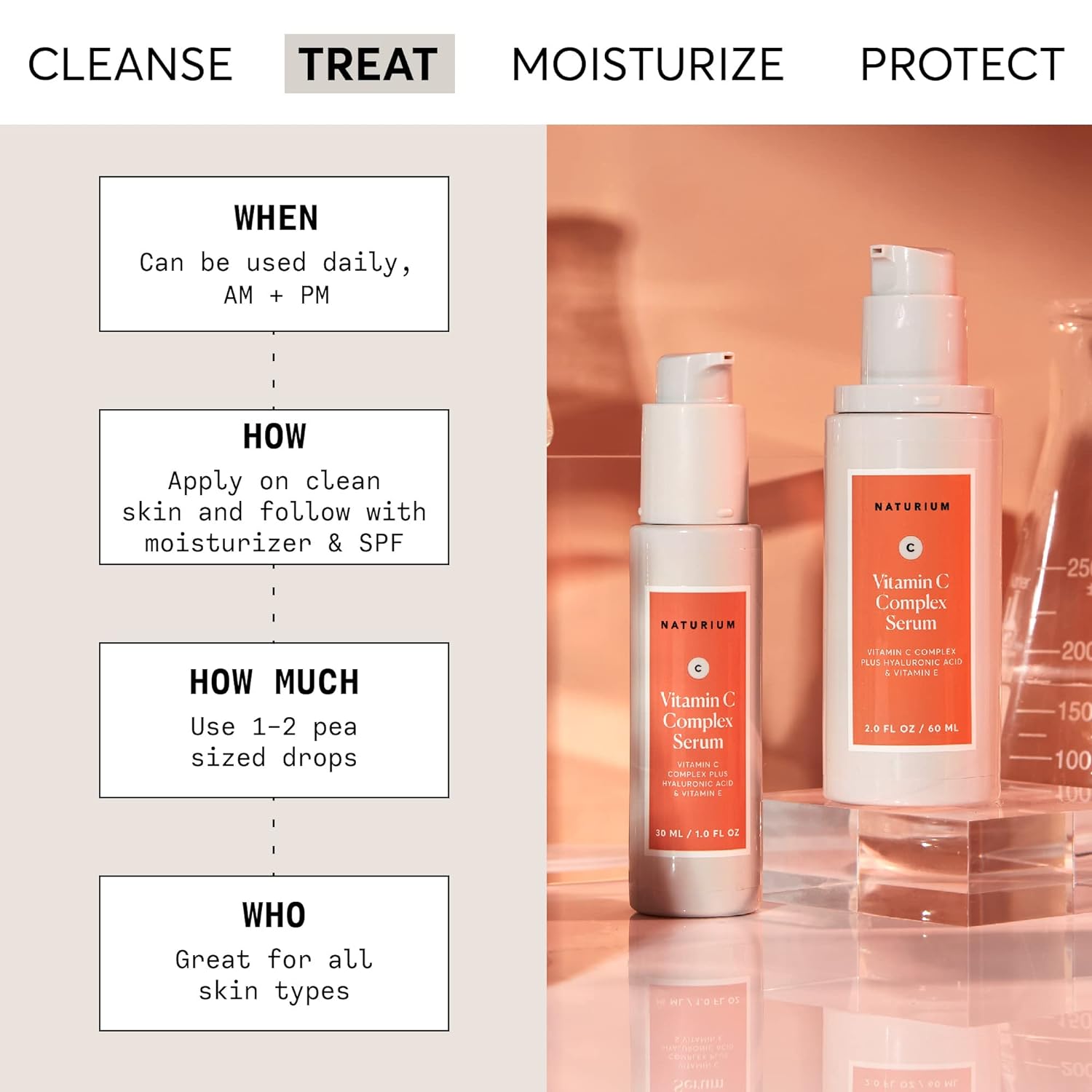
Naturium
$16.79
In stock on Amazon
Check price on AmazonWhere the Price Gap Is NOT Justified: Niacinamide and Tranexamic Acid
This is where the practitioner perspective diverges sharply from prestige marketing.
Niacinamide and tranexamic acid are water-soluble, stable across a wide pH range, and straightforward to formulate. The raw material cost is low. There is no meaningful delivery barrier that expensive technology solves. This is the category where drugstore products can match prestige formulas concentration for concentration — and the INCI list proves it.
Budget Pick: Good Molecules Discoloration Correcting Serum
Good Molecules Discoloration Correcting Serum ($15) discloses 3% tranexamic acid, 5% niacinamide, and 0.3% kojic acid on its product page. That’s a well-constructed combination protocol that maps directly to the mechanisms documented in the Holloway Barbosa et al. Journal of the American Academy of Dermatology tranexamic acid study (PubMed ID 32035574) and the Hakozaki et al. British Journal of Dermatology niacinamide study (PubMed ID 12100186). The formulation transparency is unusually high for this price point. Byrdie’s editors (Byrdie, “The Best Brightening Serums for Hyperpigmentation”) have flagged Good Molecules as one of the clearest examples of clinical-concentration actives at accessible pricing.
Visible improvement in dark spots from a tranexamic acid plus niacinamide protocol typically follows an 8–12 week timeline, consistent with the randomized controlled trial data. Patience is part of the protocol.
Naturium
$16.79
In stock on Amazon
Check price on AmazonMid-Tier Pick: Murad Rapid Age Spot Correcting Serum
Murad Rapid Age Spot Correcting Serum ($82) leads with glycolic acid and 2% hydroquinone — the OTC maximum concentration permitted in the United States. This is a different protocol from the tranexamic/niacinamide framework: hydroquinone at 2% has strong independent evidence for hyperpigmentation treatment, but it comes with usage-duration constraints (most protocols recommend cycling off after 3–4 months) and isn’t appropriate for all skin types or tones. Dermstore’s editorial team (Dermstore Blog, “Your Complete Guide to Treating Hyperpigmentation”) categorizes it as an aggressive-intervention option rather than a daily-maintenance serum for this reason.
Decision rule: If you need aggressive intervention on stubborn hyperpigmentation and have no contraindications to hydroquinone, Murad’s protocol is a legitimate tool. Don’t cross-compare it with a tranexamic acid serum — they’re not mechanistically equivalent.
CeraVe
$23.86
In stock on Amazon
Check price on AmazonPremium Pick: SkinCeuticals Discoloration Defense
SkinCeuticals Discoloration Defense ($98) combines tranexamic acid, niacinamide, and kojic acid at disclosed concentrations of 3%, 5%, and 1% respectively — nearly identical to the Good Molecules active profile. SkinCeuticals brings rigorous stability testing, professional-dispensary credibility, and packaging designed for clinical environments. Allure’s editors (Allure, “The Best Serums for Hyperpigmentation”) and Dermstore’s editorial team (Dermstore Blog, “Best SkinCeuticals Products, According to Skin Experts”) have cited it as a practitioner-recommended option for melasma and post-inflammatory hyperpigmentation.
The honest tradeoff: At retail, you are paying a meaningful premium for brand trust, the professional-channel accountability chain, and validated manufacturing quality controls. For a self-purchasing enthusiast, Good Molecules delivers the same active concentrations at a fraction of the price. For an aesthetician recommending products under their professional name, the SkinCeuticals manufacturing validation is a real — if non-formulation — benefit.
Obagi
$75.00
In stock on Amazon
Check price on AmazonLayering Compatibility: The Practical Reference
Getting the right actives means little if the protocol creates pH conflicts or sensitization. Here’s the practitioner-level compatibility map:
- L-ascorbic acid works best applied first at low pH, ideally in the AM routine. Do not layer directly with niacinamide in the same step — the two can form niacin and cause flushing. Niacinamide is fine in the PM, or after a 30-minute wait in the same routine. The Paula’s Choice Ingredient Dictionary (paulaschoice.com, Ingredient Dictionary) confirms this pH-conflict caution and recommends separating the two by routine rather than waiting window whenever possible.
- Tranexamic acid is the most forgiving brightening active available. It layers with retinol, niacinamide, peptides, and mild exfoliants without pH conflict. It’s the backbone of a multi-active brightening protocol.
- Niacinamide plays well with AHAs, tranexamic acid, retinol, and most peptides. The one exception remains high-concentration L-ascorbic acid applied simultaneously.
- Kojic acid is photosensitizing — always reserve it for PM use and ensure broad-spectrum SPF is part of the AM routine. Avoid combining it with very high-percentage AHAs in the same step due to synergistic irritation risk.
- Retinol combined with any brightening active makes AM SPF non-negotiable, not optional. The Hakozaki et al. and Holloway Barbosa et al. studies both involved SPF-controlled protocols — the brightening data assumes daily sun protection.
The Decision Framework
If the goal is antioxidant-supported brightening with the strongest published clinical data: Spend on a stabilized L-ascorbic acid formula at 15%+. SkinCeuticals C E Ferulic is the evidence benchmark. Paula’s Choice C15 Super Booster hits the clinical concentration threshold at lower cost. Drugstore alternatives rarely achieve both the concentration and the stabilization simultaneously — this is the one brightening category where the premium is genuinely formulation-driven.
If the goal is melasma, PIH from acne, or general dark-spot correction: A tranexamic acid plus niacinamide combination at disclosed concentrations is the evidence-aligned protocol. Good Molecules Discoloration Correcting Serum delivers this at $15. SkinCeuticals Discoloration Defense delivers it at $98 with professional-channel infrastructure. The active formulation is equivalent; the premium buys accountability, not chemistry.
If concentration isn’t disclosed on the label or brand website: That’s the exit signal. Minimum effective thresholds only matter if you can verify you’re meeting them. A brand that won’t disclose active percentages isn’t providing the information needed to make a real formulation decision — and in the brightening category, that’s a substantive confidence issue regardless of price point.
The INCI list doesn’t lie. The marketing copy often does. Read the list first, then decide where the premium is actually going.